 DailyrecordNg …Nigeria's hottest news blog



Related Articles



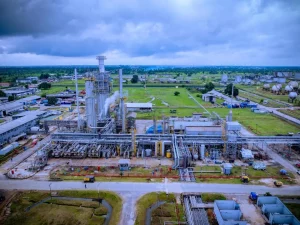
The Group Chief Executive Officer of NNPC Limited, Engr. Bayo Ojulari, has declared that the re-opening of the Port Harcourt Refinery and Petrochemical Company was a huge waste of resources.
Ojulari, who spoke on Wednesday at the ongoing 2026 Nigerian International Energy Summit, said the national oil company currently lacks the capacity to operate refineries profitably.
He noted that for refineries to function effectively, there must be adequate financing, competent Engineering, Procurement and Construction (EPC) contractors, as well as efficient operations and maintenance capacity.
The Port Harcourt Refinery, which was rehabilitated at a cost of $1.5 billion under the leadership of former NNPC GCEO, Mele Kyari, was reopened in November 2024 after about three years of rehabilitation. However, it was shut down in May 2025 due to sustained financial losses.
Ojulari explained that after studying the refinery’s operations for several months, it became evident that the facility was operating at a massive loss.
“The first thing that became clear was that we were running at a monumental loss to Nigeria. We were just wasting money. I can say that confidently now,” he said.
“So the first decision I had to make was to stop the rot by shutting it down and then quickly recalibrating to see what could be done.”
He questioned how the refinery continued to lose money despite regular crude supply.
“We were pumping cargo into the refinery every month, but utilisation was around 50 to 55 per cent. Those cargoes have value, and we were losing that value. We were spending a lot of money on operations and contractors.
“But when you look at the net outcome, we were just leaking value, and there was no clarity on how to turn those losses into positive returns,” he added.
Ojulari said NNPC is now seeking reliable partners with proven track records in refinery management to operate the country’s refineries.
“To make a refinery work, you need three things. First, you need financing to support operations and activities. Second, you need a competent EPC contractor that can deliver world-class projects. Third, you need world-class operational capacity to run the refinery”.
On plans to improve oil production, Ojulari expressed optimism that the 1.8 million barrels per day production target for 2026 is achievable.
He described the Federal Government’s 2025 budget benchmark of 2.06 million barrels per day as overambitious, noting that average production stood at about 1.7 million barrels per day last year.
“For this year, we have a target of two million barrels per day, but the budget is based on about 1.8 million barrels per day. So we are not over committing,” he explained.
“One of the financial problems Nigeria faced last year was over projection. We over projected production and, by extension, revenue.
“By the middle of the year, we ran into a crisis. Oil prices were lower and production was also below projections, yet government agencies had already made spending plans based on those assumptions. These things have far-reaching consequences.
“That is why having a credible production plan should not just be a box-ticking exercise. It is something we must all take seriously,” he said.