 DailyrecordNg …Nigeria's hottest news blog



Related Articles



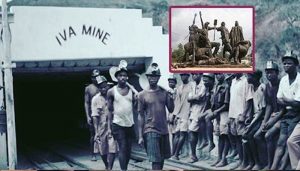
The Enugu State High Court has ordered the British government to pay £420 million to the families of the 21 coal miners who were killed on November 18, 1949, during a strike at the Iva Valley coal mine in Enugu.
In a ruling on Thursday, Justice Anthony Onovo determined that the killings were unlawful and constituted an extrajudicial violation of the right to life.
He further directed that each of the families of the victims be compensated with £20 million, totaling £420 million.
The case was filed by human rights activist Greg Onoh, who sought recognition of liability, an official apology, and reparations for the families of the victims.
The respondents in the suit included the Secretary of State for the Foreign, Commonwealth and Development Office, the British government, the Federal Government of Nigeria, the Attorney-General of the Federation, the Head of the Commonwealth, and the UK government.
No legal representation was provided for the British government, the Secretary of State, the Head of the Commonwealth, or the UK government during the proceedings.
In his judgment, Justice Onovo held that the British government must be held accountable for the deaths of the coal miners and make reparations to their families. He ruled that the British government must issue a formal apology to the families, to be tendered through their lawyers, and publish the apology in both Nigerian and UK newspapers.
“These defenceless coal miners were asking for improved work conditions; they were not embarking on any violent action against the authorities but were nonetheless shot and killed,” Onovo stated in his judgment.
The judge ordered that the British government pay £20 million per victim, totaling £420 million, as compensation for the violation of the miners’ right to life. Additionally, the British government was instructed to pay post-judgment interest at 10% per annum until the amount is fully paid. Claims for pre-judgment interest and exemplary damages were, however, refused.
Justice Onovo also directed the Nigerian government to engage diplomatically with the British government within 60 days to pursue justice, reparations, and effective remedies for the families.
The tragic events of November 1, 1949, unfolded when coal miners at the Iva Valley mine in Enugu went on strike to protest against unpaid debts and the harsh working conditions they endured under colonial rule. Coal was a major source of energy and revenue for the British colonial government at the time.
In response to the strike, the colonial authorities ordered the closure of the Iva Valley coal mine, a decision that was met with resistance from the miners. Amid escalating tensions, police chief FS Philip allegedly ordered the shooting of the striking miners, killing 21 and injuring several others.
The victims of the massacre were identified as Sunday Anyasodo, Ani Oha, Andrew J. Obiekwe Okonkwo, Augustine Chiwetalu, Onoh Ugwu, Ngwu Offor, Ndunguba Eze, Okafor Agu, Livinus Ukachunwa, Jonathan Agu Ozoani, Moses Ikegbu Okoloha, Chukwu Ugwu, Thomas Chukwu, Simon Nwachukwu, Agu Alo, Ogbonnia Ani Chima, Nnaji Nwachukwu, William Nwaku, James Onoh Ekeowa, Felix Nnaji, and Ani Nwaekwe.
This landmark ruling has revived calls for accountability and reparations for colonial-era atrocities, highlighting the unresolved legacy of the British colonial presence in Nigeria.